These are real published questions used in MedQgulf practice sessions. Sign up for the full bank to access every emergency medicine mcqs.
Sample 1·Emergency Medicine
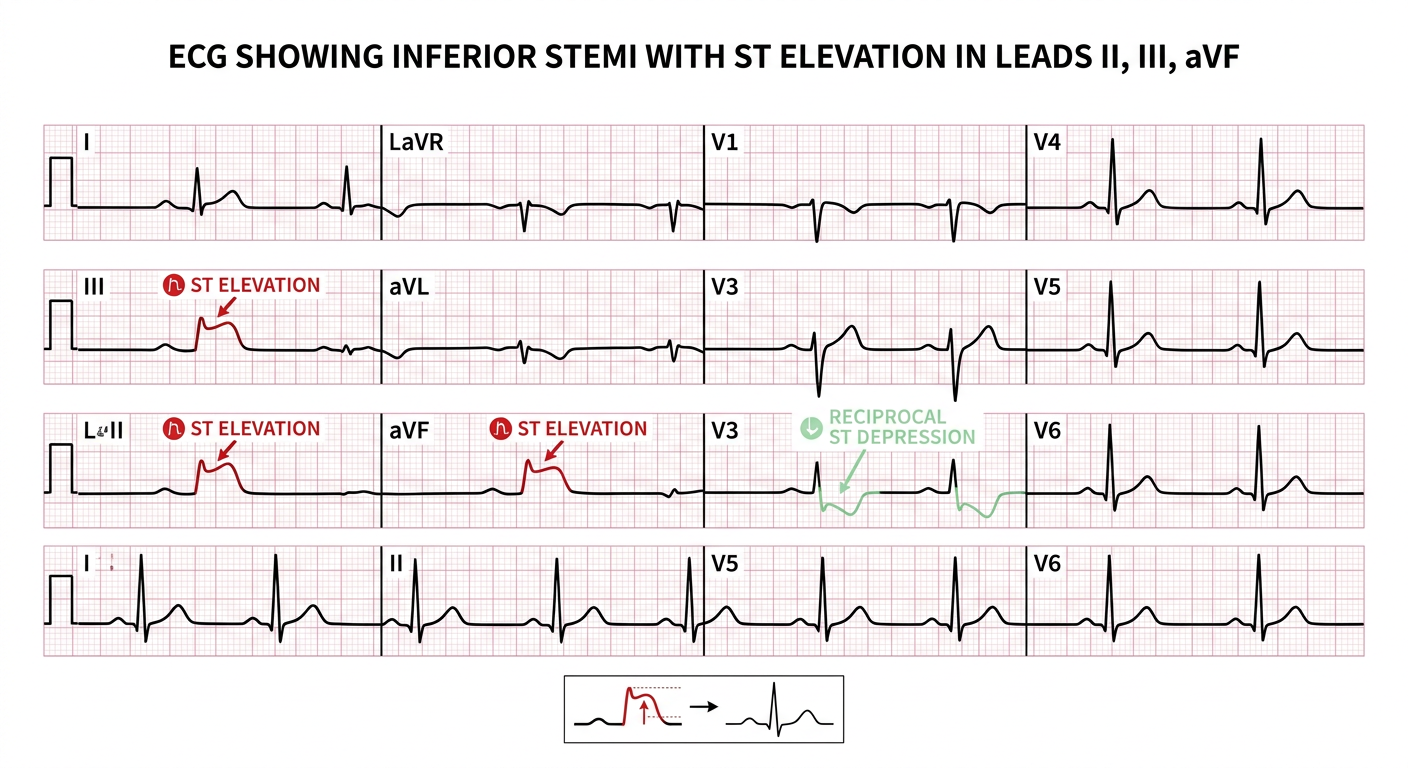
A 55-year-old male presents to the ED with sudden onset severe retrosternal chest pain radiating to his left arm, diaphoresis, and shortness of breath. He has a history of hypertension and hyperlipidemia. ECG shows ST elevation in leads II, III, and aVF. His blood pressure is 90/60 mmHg and heart rate is 110 bpm.
- AAdminister immediate aspirin, nitroglycerin, and morphine.
- BAdminister immediate aspirin, ticagrelor, and obtain cardiology consultation for primary PCI.
- ✓Administer immediate aspirin, clopidogrel, and consider thrombolytic therapy if PCI is unavailable within 90 minutes of first medical contact.
- DAdminister immediate aspirin, unfractionated heparin, and initiate intravenous fluids.
Explanation
This patient is experiencing an inferior ST-elevation myocardial infarction (STEMI) with signs of cardiogenic shock (hypotension). Aspirin and a P2Y12 inhibitor (clopidogrel) are essential. While primary PCI is preferred, thrombolysis is indicated if PCI cannot be performed within the recommended timeframe, especially in unstable patients. Nitroglycerin is contraindicated in inferior STEMI with hypotension due to preload dependence. Unfractionated heparin is indicated but not the sole immediate intervention. Ticagrelor is an alternative P2Y12 inhibitor but clopidogrel is widely available. IV fluids alone won't address the underlying ischemia.
Sample 2·Emergency Medicine
A 68-year-old female is found unresponsive by her family. Paramedics arrive to find her apneic and pulseless. They initiate CPR and attach an AED, which advises 'no shock advised'. Upon arrival at the ED, high-quality CPR is ongoing, IV access is established, and intubation is performed. Her rhythm on the monitor is asystole.
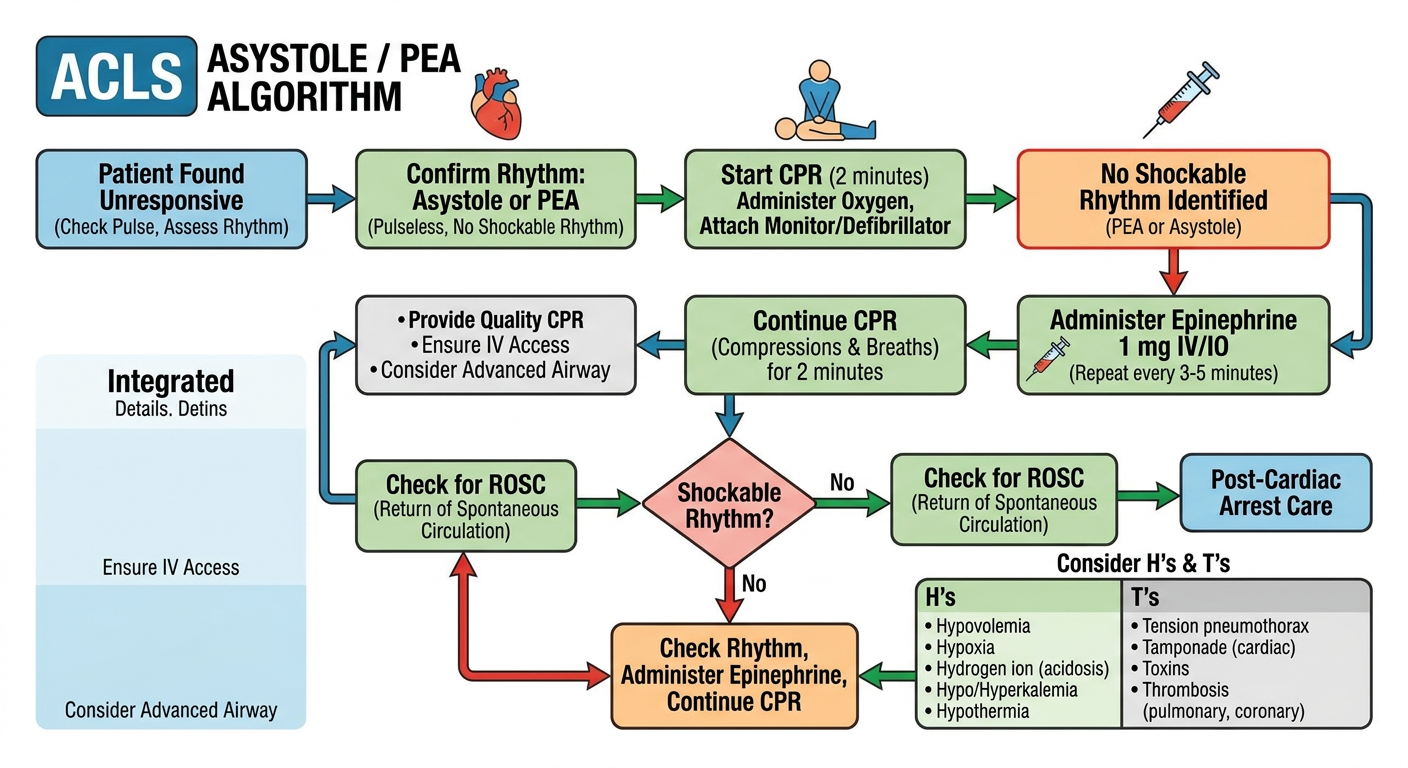
- ✓Administer 1 mg IV push epinephrine every 3-5 minutes, continue CPR, and identify reversible causes.
- BAdminister 300 mg IV push amiodarone, continue CPR, and identify reversible causes.
- CDefibrillate immediately, then administer 1 mg IV push epinephrine.
- DHold all medications and continue CPR until a perfusing rhythm is achieved.
Explanation
For asystole, the primary pharmacologic intervention according to ACLS guidelines is epinephrine 1 mg IV/IO every 3-5 minutes, continued high-quality CPR, and aggressive search for reversible causes (H's and T's). Amiodarone is for shockable rhythms. Defibrillation is not indicated for asystole. Withholding medications is incorrect as epinephrine is a critical intervention.
Sample 3·Emergency Medicine
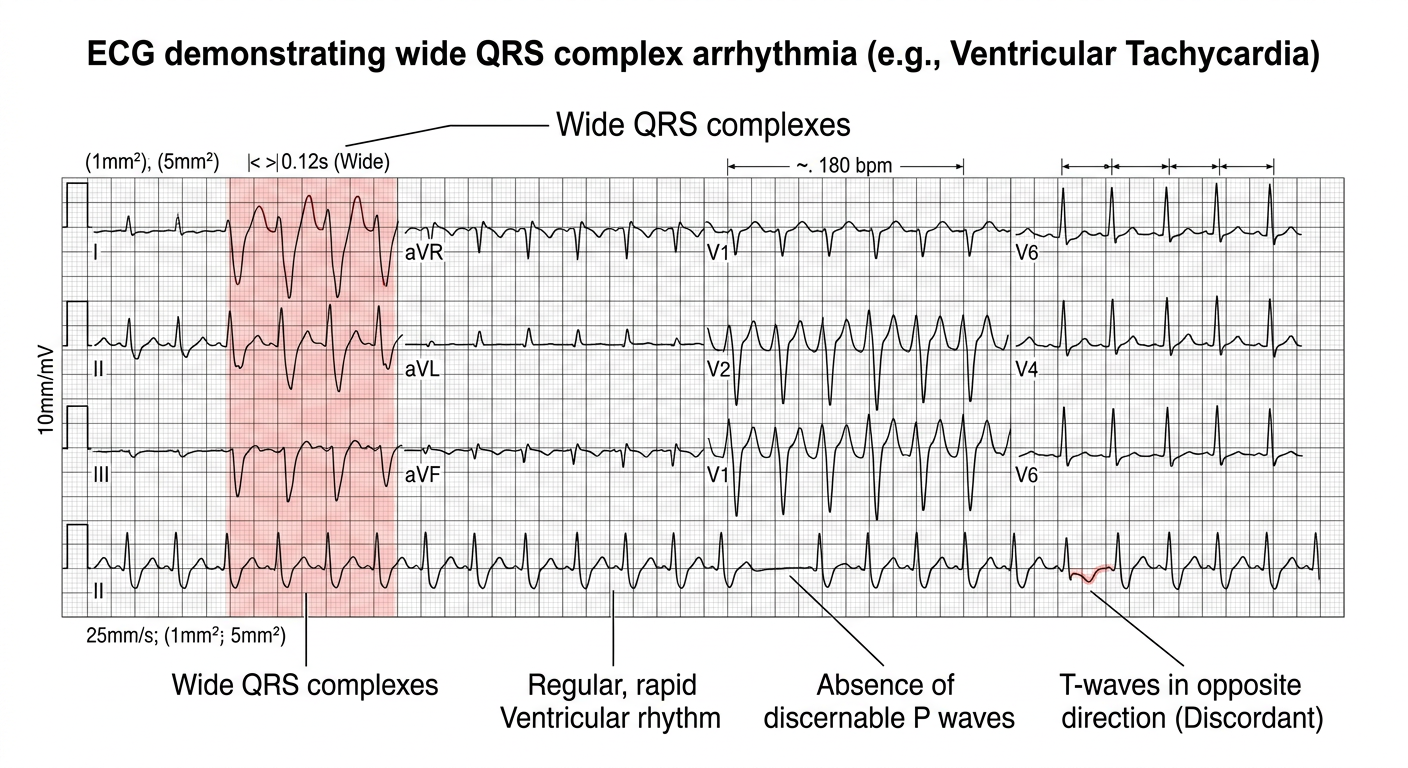
A 4-year-old boy is brought to the ED by his parents after ingesting an unknown number of their antidepressant pills an hour ago. He is drowsy, hypotensive (70/30 mmHg), and has a wide QRS complex (0.16s) on ECG. Respirations are shallow at 8 breaths per minute.
- AAdminister activated charcoal, obtain serum acetaminophen level, and prepare for gastric lavage.
- ✓Administer intravenous fluids, bicarbonate, and consider intralipid emulsion.
- CAdminister flumazenil, observe for seizure activity, and monitor neurological status.
- DAdminister naloxone, obtain blood gas, and monitor respiratory effort.
Explanation
The patient's presentation (drowsy, hypotensive, wide QRS) is highly suggestive of tricyclic antidepressant (TCA) overdose. Treatment includes IV fluids for hypotension, sodium bicarbonate for QRS widening and acidosis (membrane stabilization), and intralipid emulsion can be considered for severe cases, especially those refractory to conventional therapy. Activated charcoal is an option but not the primary intervention for a wide-complex arrhythmia and hemodynamic instability. Flumazenil is contraindicated in TCA overdose due to seizure risk. Naloxone is for opioid overdose.
Sample 4·Emergency Medicine
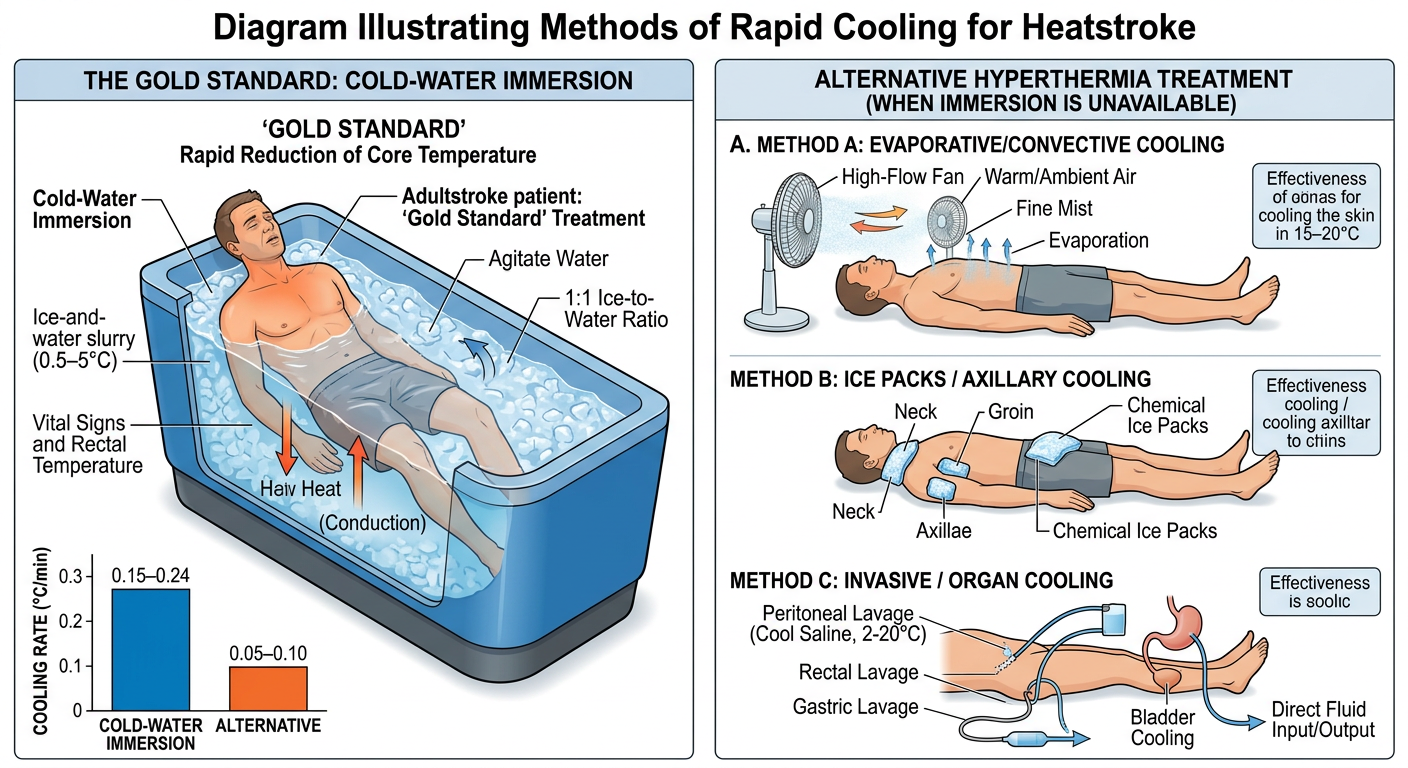
A 30-year-old male construction worker collapses on a hot summer day in Qatar. On arrival, he is unconscious, has hot, dry skin, and a rectal temperature of 41.5°C. His blood pressure is 80/50 mmHg, and heart rate is 130 bpm.
- AAdminister dantrolene, apply ice packs to groin and axillae, and infuse cold intravenous fluids.
- ✓Promptly immerse in an ice bath, provide oxygen, and monitor core body temperature.
- CAdminister acetaminophen and ibuprofen, start IV fluids, and monitor for rhabdomyolysis.
- DTransport to a cooler environment, apply evaporative cooling techniques, and provide aggressive intravenous hydration.
Explanation
This patient presents with classic features of exertional heatstroke. Rapid cooling is paramount to prevent multi-organ dysfunction and death. Immersion in an ice bath or cold water is the most effective and rapid cooling method, achieving cooling rates of 0.1-0.2°C per minute. Dantrolene is for malignant hyperthermia. Antipyretics (acetaminophen/ibuprofen) are ineffective for heatstroke as the thermoregulatory center is overwhelmed, not reset. While moving to a cooler environment and IV hydration are important, they are secondary to rapid aggressive cooling.
Sample 5·Emergency Medicine
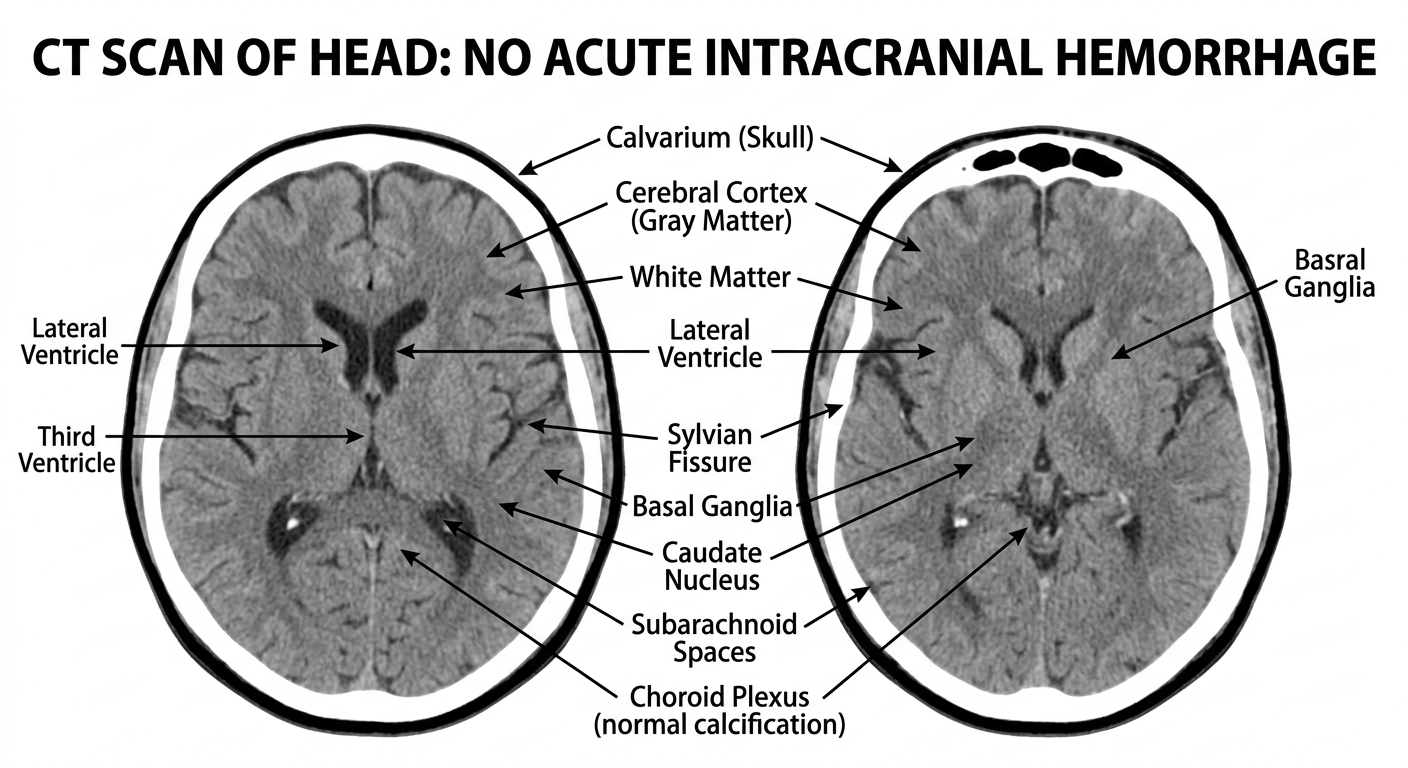
A 70-year-old female presents to the ED with sudden onset right-sided weakness, facial droop, and speech difficulty. Symptoms began 2 hours ago. Her blood pressure is 180/100 mmHg. Her NIHSS score is 12. Non-contrast CT scan of the head shows no evidence of hemorrhage.
- AAdminister aspirin and clopidogrel immediately to prevent further clot formation.
- ✓Administer intravenous tissue plasminogen activator (tPA) after confirming eligibility criteria.
- CControl blood pressure aggressively to less than 140/90 mmHg using nicardipine drip.
- DPrepare for mechanical thrombectomy directly, bypassing tPA due to the severity of symptoms.
Explanation
This patient is presenting with acute ischemic stroke within the therapeutic window for tPA. Given no hemorrhage on CT and symptoms onset within 4.5 hours (or up to 24 hours for mechanical thrombectomy in selected cases), IV tPA is indicated if eligibility criteria are met. Antiplatelets are contraindicated acutely if initiating tPA. Blood pressure management is important but should be targeted to <185/110 mmHg BEFORE tPA administration, not aggressively below 140/90 mmHg initially as this can worsen cerebral perfusion. Mechanical thrombectomy can be considered, especially for large vessel occlusion, but tPA should not be bypassed if indicated, and tPA is often given bridging to thrombectomy.